
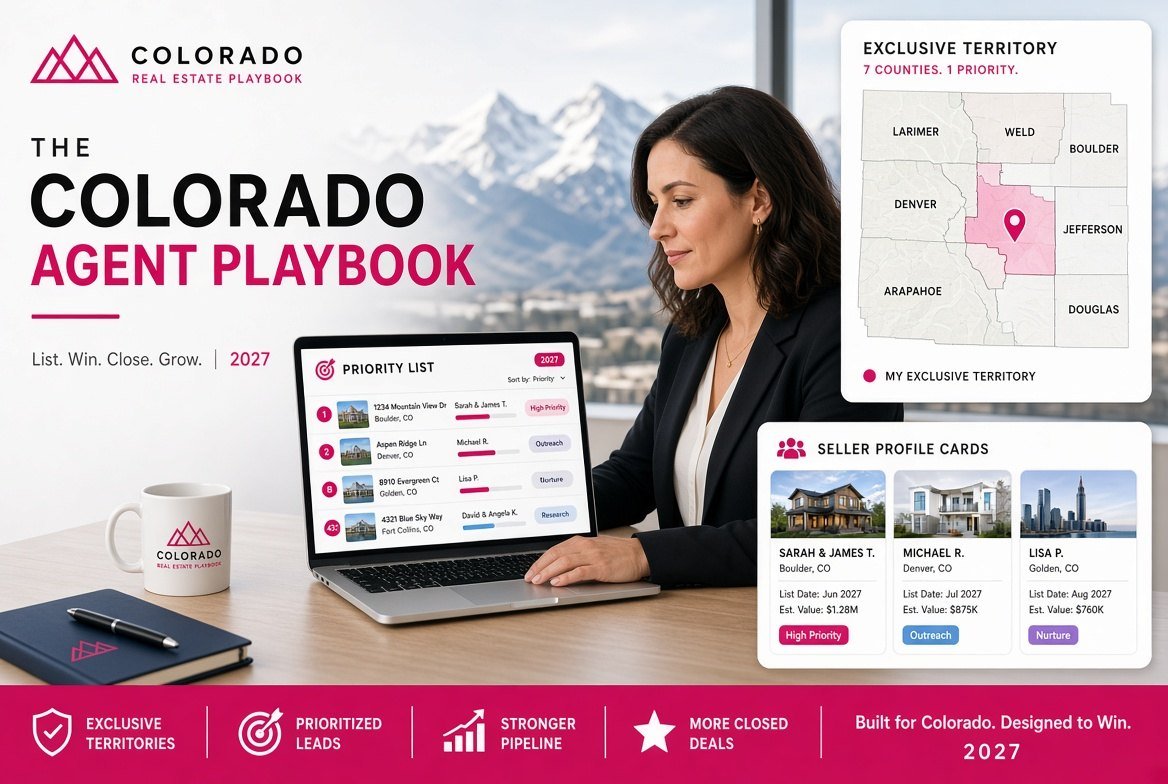
Rethinking the 2027 Business Plan: Why Englewood Real Estate Agents Must Abandon Vanity Metrics and Master Listing Acquisition Cost (LAC)
As real estate professionals across Arapahoe County begin drafting their 2027 strategic plans, a dangerous habit persists in executive suites and team meetings alike: the obsession with Gross Commission Income (GCI). For decades, GCI has been the headline metric celebrated at industry award galas from South Broadway to Downtown Denver. But in today’s hyper-efficient, data-driven Englewood market, GCI is nothing more than a vanity metric. If your top-line revenue is $1 million, but you spent $450,000 on low-converting portal leads and burned 1,200 hours chasing unqualified contacts, your actual profit margin is dangerously thin.
To build a resilient, high-margin advisory business in Englewood over the next decade, top-producing brokers must pivot to the single most critical financial indicator of modern brokerage: Listing Acquisition Cost (LAC). Understanding, controlling, and systematically lowering your LAC is the key to capturing market share in Englewood's unique micro-markets—from the historic mid-century ranches of Arapahoe Acres to the modern infill developments along the South Broadway (SoBo) corridor.
The Hidden Profit Killer: Deconstructing Listing Acquisition Cost (LAC)
What exactly is Listing Acquisition Cost? Simply put, LAC represents the total aggregate expenditure required to secure a single signed listing contract. It is calculated using a comprehensive formula that traditional accounting often misses:
$$LAC = \frac{\text{Direct Marketing Costs} + \text{Lead Tech Stack Spend} + \text{Opportunity Cost of Agent Time}}{\text{Total Closed Seller Listings}}$$
In Englewood, where listing inventory remains tightly held and competition among Denver Metro agents is fierce, traditional acquisition methods are driving LAC through the roof. Brokers relying on legacy playbooks are spending unprecedented amounts to secure fewer listings, severely compressing their net operating margins.
The Shared Lead Trap: Why Your Current Pipeline Is Bleeding Capital
If your current strategy relies heavily on buying shared leads from national aggregate portals, your high LAC is not an accident—it is a math problem designed to work against you. Here is why the traditional lead model is failing Englewood agents:
- The 99% Failure Rate: Premier portal leads convert at an industry average of just 1% to 2%. That means you are funding the overhead for the 98% to 99% of contacts who will never transact, buy in another municipality, or choose another agent.
- The Shared Inventory Dilemma: A seller inquiring about home values in Englewood’s Cherrelyn or Romona Park neighborhoods is frequently sold as a "lead" to four or five different agents simultaneously. This triggers an exhausting "speed-to-lead" race that commoditizes your expertise.
- The Devastating Time Tax: Chasing unqualified, cold portal contacts drains your most valuable asset: professional time. Every hour spent making cold calls to internet leads is an hour stolen from high-touch, fiduciary client service, strategic networking, or local sphere cultivation.
- Extravagant Referral Splits: Modern portal success-fee models demand anywhere from 25% to 40% of your gross commission at closing. When combined with your brokerage split, your effective take-home pay shrinks dramatically.
The Englewood Context: Why Hyper-Local Precision Beats Broad-Net Prospecting
Englewood is not a monolith. The real estate dynamics surrounding the Swedish Medical Center and Craig Hospital healthcare corridors differ vastly from the classic bungalow blocks near the Englewood Transit Center or the high-value pockets adjacent to Cherry Hills Village.
A broad-net marketing strategy—such as buying zip-code-wide digital leads or blasting mass mailers across the entirety of 80110 and 80113—wastes valuable capital on property owners who have zero mathematical probability of moving in the next 36 to 48 months. For instance, a homeowner who refinanced their mid-century ranch near Harvard Gulch in 2021 at a 2.75% interest rate is statistically locked into their property unless compelled by specific, major life events.
To reduce your LAC, your marketing dollars must bypass the locked-in majority and focus exclusively on properties where structural, demographic, or financial catalysts are actively brewing.
Enter Opportunity Intelligence: Leveraging Predictive AI to Isolate the Top 5%
The antidote to unsustainable Listing Acquisition Costs is Opportunity Intelligence (OI). Rather than casting a wide, expensive net across all of Englewood and hoping for a bite, Opportunity Intelligence utilizes machine learning, predictive analytics, and localized data points to identify the **top 5% of property owners** who are statistically most likely to sell within the next 6 to 12 months.
How Predictive Data Transforms Englewood Listing Acquisition
Predictive AI platforms aggregate and analyze thousands of public and proprietary data signals to build hyper-accurate propensity-to-sell models. In Englewood, these high-intent signals include:
- Zoning & Infill Catalysts: Identifying single-family parcels in Englewood’s transit-oriented districts or R-2/multi-family zones where property owners are holding high-value land ripe for developer acquisition or ADU (Accessory Dwelling Unit) integration.
- Equity Thresholds & Debt Ratios: Pinpointing long-term homeowners in neighborhoods like South Oxford who possess 70%+ home equity, creating prime opportunities for downsizing, relocating out of state, or executing 1031 exchanges.
- Demographic & Life Event Indicators: Tracking localized public data related to probate filings, marriage changes, corporate transfers out of the Denver Tech Center (DTC), or sudden changes in property tax assessment burdens.
- Permit Activity & Deferred Maintenance: Cross-referencing municipal permit filings (or a lack thereof over a 15-year tenure) to identify homes ready for cash-investor dispositions or fix-and-flip acquisitions.
By shifting your resources exclusively toward this hyper-targeted 5% segment, your conversion metrics fundamentally shift. You are no longer competing against five agents for a shared internet lead; you are initiating proactive, consultative conversations with high-probability sellers long before they click a portal button.
The 2027 Strategic Playbook: Building Your Low-LAC Data Engine
To operationalize Opportunity Intelligence and lower your LAC in Englewood by 50% or more before 2027, implement this tactical four-stage blueprint:
1. Audit Your Historical LAC and Time Allocation
Calculate your true historic LAC over the past 24 months. Total up your lead generation software subscriptions, portal spend, direct mail expenses, and administrative overhead. Divide that by your total closed listing sides. Next, multiply the hours spent prospecting cold leads by your desired hourly wage. Prepare for a reality check—and use that figure as your baseline for optimization.
2. Transition from Zip Code Marketing to Micro-Targeted Pods
Stop buying broad zip codes like 80110. Instead, leverage predictive data tools (such as SmartZip, Reonomy, or localized MLS data-scraping algorithms) to curate hyper-specific target "pods" of 300 to 500 properties in Englewood that exhibit top-tier seller propensity scores. Focus your direct mail, digital IP targeting, and hyper-local market reports strictly on these properties.
3. Position as an Advisory Fiduciary, Not a Salesperson
High-propensity sellers do not respond to generic "I Have Buyers!" postcards. They respond to sophisticated market intelligence. Develop hyper-local content focused on Englewood equity positioning, structural zoning updates, municipal tax revaluations, and customized home valuation audits. Position yourself as an authoritative local market analyst.
4. Reinvest Margin Gains into Relational Sphere Architecture
As your LAC drops and your profit margins expand, allocate a portion of your saved marketing budget toward deepening relationships within your core sphere of influence. High-touch client appreciation events along South Broadway, local civic partnerships, and personalized client advisory check-ins yield listing referrals with an effective LAC approaching zero.
The Bottom Line: Engineering Profitability in Tomorrow’s Englewood Market
The era of growing a real estate practice purely through brute-force GCI expansion and unchecked lead generation spend is officially over. As Englewood’s real estate landscape continues to mature, market dominance belongs to the brokers who treat their practices as lean, high-margin asset management businesses.
By replacing expensive, low-converting shared leads with Opportunity Intelligence, you eliminate capital waste, reclaim hundreds of operational hours, and position yourself as the premier, data-driven fiduciary in Englewood. As you finalize your strategic vision for 2027, remember: GCI is vanity, profit is sanity, and LAC is your ultimate competitive edge.